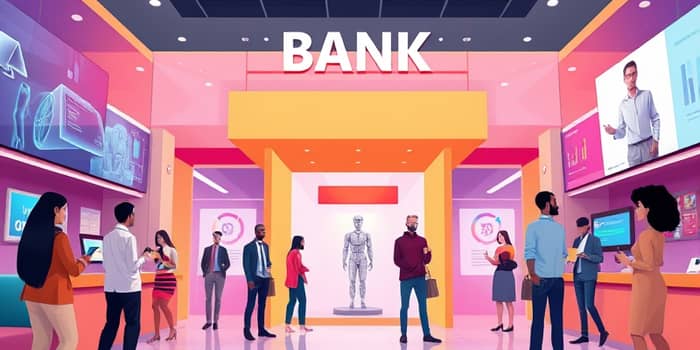
Retail banking is undergoing a profound metamorphosis. As digital innovations surge forward, institutions must blend technology and human insight to thrive in 2025 and beyond.
The traditional branch model is no longer sufficient. With the global retail banking market surpassed the $3 trillion mark in 2023, banks face mounting pressure to evolve faster than ever before.
Emerging fintech challengers and neobanks threaten established players, prompting a strategic rethink of customer engagement, operational efficiency, and profitability.
Over half of banking executives—53%—are now spearheading digital transformation initiatives to capture new growth opportunities. The primary driver remains revenue growth (77%), followed by enhanced customer experience and cost optimization.
Yet only 18% of banks report high success in achieving their goals, revealing a significant execution gap.
By focusing on these pillars, banks can reduce manual errors, bolster compliance, and unlock fresh revenue streams through digital products such as mobile wallets and integrated ecosystems.
Data analytics and AI are at the heart of modern retail banking. Personalization leapt from 27% to 35% as a strategic priority, outpacing broad digital transformation in some surveys.
BCG estimates that AI could unlock $370 billion in annual profits for retail banks, driven by:
Virtual assistants, real-time risk monitoring, and automated document processing showcase the power of advanced analytics and machine learning in reshaping customer journeys.
Contrary to early predictions, branches are not disappearing but transforming into advisory centers. Only 8% of banks plan aggressive closures, down from 13%, signaling a shift toward high-value human engagement.
Institutions are redesigning lobby areas into consultation lounges and equipping staff with tablets and digital tools to deliver tailored advice on wealth management, business financing, and complex products.
This new model thrives on reimagined advisory-focused branch networks where customers transition smoothly from digital touchpoints to in-person guidance.
Consumers now expect seamless omnichannel customer journeys across web, mobile, and branch interactions. Mobile banking remains the fastest-growing channel, demanding collaborative features like co-browsing and in-app support.
Real-time payment capabilities, rising from 49% adoption in 2024 to 62% in 2025, have moved from luxury to baseline expectation.
By eliminating silos and integrating data flows, banks can deliver unified experiences that anticipate needs and resolve issues in real time.
Automation, blockchain, and open banking APIs are forging new service models:
These technologies not only drive cost efficiency but also enable partnerships with fintechs, creating frictionless financial ecosystems that span lending, payments, and wealth management.
Small and medium enterprises (SMEs) now demand sophisticated mobile banking, payroll integration, and real-time cash visibility. Priorities for financial visibility tools jumped from 23% to 33% in one year.
At the same time, inclusive banking initiatives are expanding access to the under-banked by leveraging personalization and low-touch digital channels, ensuring no demographic is left behind.
Despite promising opportunities, banks face hurdles:
Legacy systems lag behind customer experience priorities, with only 25% of institutions modernizing core IT. Cultural resistance, talent shortages, and integration complexities further slow progress.
Regulatory burdens around data privacy, fintech partnerships, and cybersecurity continue to grow, requiring robust compliance frameworks.
PwC recommends three priority actions:
The winners in the next decade will be institutions that unify cutting-edge digital tools with high-touch advisory services. This hybrid model ensures resilient profitability, enhanced customer loyalty, and a clear path through disruption.
By prioritizing data-driven personalization, modernizing legacy systems, and reimagining branches as relationship engines, retail banks can move Beyond the Branch—reinventing themselves for a new era of financial services.
References