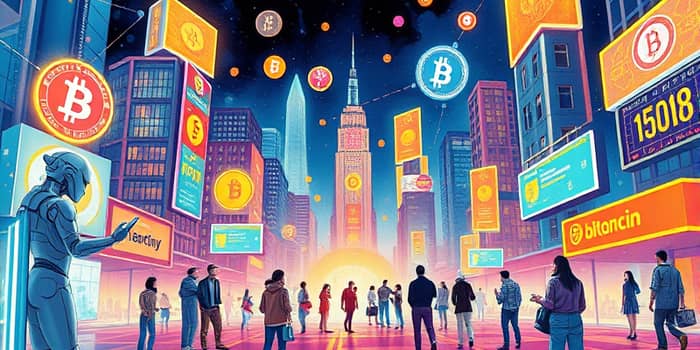
As we stand at the crossroads of innovation and opportunity, the financial industry is being reimagined. From AI-driven insights to embedded banking experiences, the future of finance promises both challenges and breakthroughs.
In this article, we explore the key forces shaping FinTech in 2025 and beyond, offering practical guidance to entrepreneurs, institutions, and consumers eager to embrace the next era of financial services.
Financial institutions are racing to integrate generative AI into core operations. Loan origination workflows, customer service centers, and back-office processes are being redefined by intelligent automation.
With dramatically reducing costs and improving efficiency, banks deploy AI-powered chatbots that deliver personalized investment advice and 24/7 support. Meanwhile, machine learning models sift through millions of transactions to detect anomalies and prevent fraud in real time.
By automating routine tasks, human teams can focus on strategic, high-value activities—empowering employees and enhancing customer satisfaction.
Embedded finance embeds payment, lending, and insurance services directly into non-financial platforms, creating seamless user journeys. From e-commerce checkout flows to ride-share apps, financial services are no longer confined to bank branches.
Analysts forecast that embedded finance will reach $320 billion in global revenues by 2030. Consumers benefit from instant access to credit at the point of need, while businesses unlock new revenue streams and deeper customer relationships.
This trend fosters cooperation between banks and technology firms, blending trust with agility.
Blockchain is moving beyond experimentation into mainstream financial infrastructure. Tokenized assets, stablecoins, and smart contracts are revolutionizing how value is transferred and stored.
The World Economic Forum predicts that 10% of global GDP could be tokenized by 2027, enabling transparent, secure cross-border transactions. Platforms like Circle facilitate instant supplier settlements and remittances using stablecoins, reducing reliance on traditional correspondent banking.
DeFi protocols offer decentralized lending, borrowing, and yield strategies, challenging incumbent institutions to innovate or cooperate with emerging platforms.
Account-to-account (A2A) real-time payments are surging worldwide. Between 2023 and 2030, the value of instant payment systems is expected to grow by 289%, with a 33% CAGR to 2032.
At the same time, ‘glocal’ payments combine global reach with local compliance—ensuring merchants and consumers can transact across borders in native currencies and under regional regulations.
Virtual cards and digital wallets streamline B2B procurement and expense management, turning complex workflows into frictionless experiences.
Open banking initiatives have laid the groundwork for open finance, extending data sharing beyond payments to investments, pensions, insurance, and mortgages.
Global open banking payment transactions are projected to hit $116 billion by 2026—a 2,800% increase since 2021. This expansion fosters competition, drives innovation, and enhances consumer choice, while raising important questions around data security and governance.
Sustainability is no longer optional. FinTech firms and incumbent banks alike are embedding environmental, social, and governance (ESG) criteria into product design and risk assessment.
Green bonds, carbon-tracking portfolios, and sustainable lending platforms are differentiators in a market where consumers and regulators demand accountability. Firms that prioritize ESG are building long-term resilience and stakeholder trust.
Gen Z expects hyper-personalized financial experiences. According to research, 81% of Gen Z customers believe that tailored services deepen relationships with their providers, compared to only 47% of those over 65.
By leveraging AI and real-time data, institutions create micro-segmented offerings: custom loyalty programs, predictive budgeting tools, and curated investment portfolios that resonate with individual preferences.
This shift toward personalization is reshaping marketing, product development, and customer engagement strategies.
As FinTech innovations proliferate, regulatory scrutiny intensifies. Automated compliance tools, governance frameworks for AI decision-making, and real-time risk monitoring are becoming indispensable.
Financial institutions are deploying AI for transaction monitoring, KYC checks, and stress testing, ensuring they meet evolving mandates without sacrificing agility.
Building and maintaining trust hinges on transparency, data privacy, and ethical AI governance—cornerstones of a sustainable FinTech ecosystem.
FinTech M&A activity is rebounding, driving consolidation and platform synergies. Growth-stage companies such as Klarna, Stripe, and Chime are preparing for IPOs, injecting fresh capital and energy into the market.
Scalable cloud infrastructure and modular architectures underpin rapid innovation while ensuring security and compliance. As capital allocation becomes more efficient, startups enjoy longer funding cycles and reduced dilution.
The future belongs to organizations that combine technological prowess with an unwavering focus on user experience and regulatory integrity.
Designing the next generation of finance requires vision, collaboration, and relentless execution. From generative AI to embedded services, blockchain innovations to sustainable finance, the possibilities are limitless.
By embracing these trends and maintaining a customer-centric mindset, the industry can deliver financial inclusion, efficiency, and security at an unprecedented scale.
As we move forward, the organizations that invest in technology, trust, and talent will shape the FinTech futures we all aspire to realize.
References