In November 2025, investors stand at a crossroads where global trends intersect with local realities. As growth moderating from 3.3% in 2024 signals evolving dynamics, discerning value across borders demands both a panoramic view and granular insight. This article explores the global economic backdrop, regional performances, thematic investment drivers, risks and opportunities, and strategic steps to find tangible value abroad in a complex environment.
The International Monetary Fund projects global GDP growth of 3.2% in 2025, reflecting a modest slowdown from the previous year. While advanced economies inch forward around 1.5%, emerging markets maintain a robust pace just above 4%. Inflation has begun declining but above targets in key regions, with the United States facing persistent price pressures despite overall easing.
Major central banks are poised to implement interest rate cuts by mid to late 2025, aiming to stimulate capital market activity and revive dormant IPO pipelines. Yet, trade protectionism continues to intensify across the US, EU, and select emerging economies, introducing new complexities for cross-border investment and supply chain strategies.
Regional divergences underscore the need for tailored approaches. While the US enjoys a post-election policy focus on infrastructure and technology, the Eurozone grapples with uneven momentum. Certain countries like Spain outperform, whereas Germany’s recovery lags. The UK is buoyed by looser fiscal measures, and Canada anticipates rate cuts amid slowing population growth.
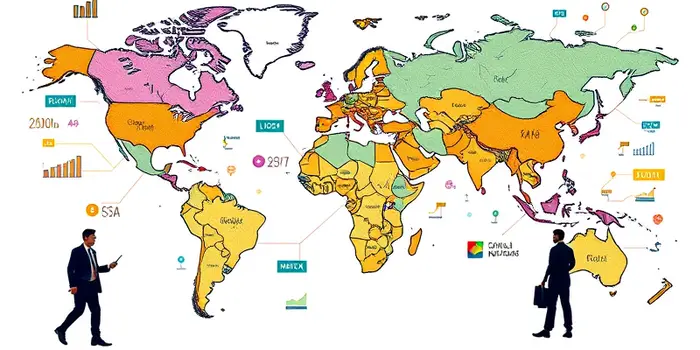
Below is a snapshot of GDP growth projections and key trends across major regions in 2025:
Several thematic areas are shaping investment opportunities worldwide. Embracing these themes can help investors identify sectors poised for accelerated growth and resilient performance.
In the technology realm, roughly 35% of companies now leverage AI for enhanced decision-making, fraud detection, and predictive maintenance. The AI market, valued at over $184 billion in 2024, continues to expand as enterprises pursue automation and advanced data analytics.
On the sustainability front, consumer trust in environmentally responsible brands has soared, with 92% of buyers prioritizing eco-friendly credentials. Manufacturers are adopting circular models—reusing, recycling, and redesigning products—to reduce waste and align with evolving regulatory standards.
Meanwhile, a shift toward lean local over global preferences in regions like Brazil, China, and the UAE underscores the rising importance of local sourcing and personalized experiences. Gen Z’s spending power, projected to reach $8.9 trillion by 2035, propels innovation in social commerce, omnichannel retail, and digitally enabled services.
While the global backdrop offers promise, investors must remain vigilant of potential headwinds that could derail growth and returns. Awareness and mitigation of these risks are crucial for successful value discovery.
At the same time, pockets of opportunity emerge as markets evolve. Remote work trends enable companies to tap into global talent pools at reduced costs, and digital expansion in underserved regions opens new revenue channels. The green transition promises significant capital deployment in critical minerals, renewable energy infrastructure, and sustainable logistics.
As global job markets transform, net growth of 78 million jobs is expected by 2030. Sectors such as AI development, renewable energy, and circular supply chain management will drive much of this expansion, rewarding investors who align with structural labor shifts.
Identifying value abroad is not simply a matter of choosing the right region or sector. It requires a coherent strategy that weaves together macro insights, local intelligence, and operational excellence.
First, prioritize research on country-specific regulations, consumer preferences, and competitive landscapes. Use data-driven tools to analyze consumer channel transformation trends and model potential revenue scenarios under different policy environments.
Second, engage in strategic partnerships or joint ventures with established local players. Such collaborations facilitate market entry, regulatory navigation, and cultural alignment, reducing execution risk and accelerating time to value.
Third, adopt a flexible capital allocation framework. Allocate capital across geographies and themes, shifting weight toward regions with compelling valuations or regulatory tailwinds. Prepare to deploy additional resources in response to favorable policy changes or market dislocations.
Finally, embed sustainability and digital capabilities at the core of any value creation plan. Consumers and regulators alike increasingly demand transparent supply chains, eco-friendly practices, and digital engagement. Championing these elements will bolster brand equity and support long-term returns.
By balancing global reach with local needs, investors and businesses can transcend generalized strategies and forge meaningful competitive advantages. Whether through identifying structural inefficiencies, leveraging emerging themes, or partnering with regional champions, the path to value abroad is navigable for those willing to combine insight with agility.
In the coming year, the interplay between policy shifts, demographic transformations, and technological breakthroughs will continue to reshape the investment landscape. Embrace a proactive mindset, harness rigorous analysis, and remain attuned to local contexts—this is the blueprint for discovering and capturing enduring value in a complex global economy.
References