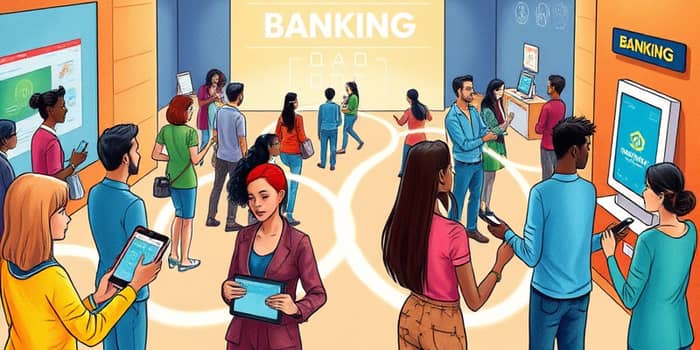
In today’s rapidly evolving financial landscape, institutions must place customers at the heart of every decision. personalized, seamless, and meaningful experiences are no longer optional—they are the standard for any forward-thinking bank. From mobile apps to branch visits, user-centric design transforms banking from a transactional chore into a trusted partnership.
The shift from product-driven models to holistic, customer-first strategies demands a profound rethinking of processes, technology, and culture. Modern consumers expect their bank to anticipate needs, simplify complex tasks, and deliver solutions that align with their unique life goals. When banks deliver on these expectations, they build enduring loyalty and unlock new growth opportunities.
Just a decade ago, many banks marketed rigid savings accounts, credit cards, and loan packages. Today, customers demand intuitive digital interfaces and consistent experiences across every channel. A seamless journey might begin with research on a desktop, continue on a smartphone, and conclude with expert advice in-branch or via chat—all without redundant steps.
This transformation is fueled by consumer expectations shaped by leading tech companies. Financial institutions that fail to innovate risk losing trust—and market share—to nimble fintech challengers. Banks must chart a new path, one that places empathy, agility, and design at the forefront of strategy.
At the core of user-focused banking lies a set of guiding principles. These pillars ensure that every product, touchpoint, and interaction reinforces trust and delivers value.
When user-centric principles guide technology development, banks can deliver truly transformative features that resonate with customers.
Banks that adopt user-centric design experience a substantial impact on both customer metrics and the bottom line.
Several institutions have set benchmarks for how design-driven banking can spark growth and deepen relationships.
Global banks like Wells Fargo, BBVA, and HSBC further illustrate how AI-enabled personalization and proactive protections elevate trust and safety.
Achieving user-centric excellence requires a disciplined, research-driven approach.
Begin with rigorous user research—interviews, usability tests, and behavioral analytics—to uncover pain points. Employ empathy in every design choice, using live chat or co-browse features to replicate human connection within digital channels. Adopt a digital-first mindset without losing the personal touch: customers value seamless self-service and timely access to experts when complexity arises.
Maintaining a consistent brand experience across desktop, mobile, and in-branch environments builds familiarity and confidence. Remember, true user-centricity goes beyond aesthetics, actively solving customer pain points and anticipating needs before they arise.
Looking ahead, banks face both promising opportunities and critical challenges. They must balance powerful data usage with strict privacy safeguards, ensuring customers retain control and trust. Continuous innovation in areas like biometrics, open banking, and natural language processing will expand capabilities—but only if aligned with human-centric values.
Demographic shifts demand inclusive design that serves digital natives, older adults, and underbanked communities alike. Meanwhile, non-traditional players—from tech giants to specialized fintechs—will keep raising the bar on user experience. Banks that embrace a customer-first philosophy will not only survive, but lead.
User-centric finance is more than a trend—it is the cornerstone of sustainable banking success. By embedding empathy, data-driven insights, and agile innovation into every design and strategic choice, institutions can build deeper relationships, drive measurable growth, and create lasting impact.
Now is the moment for banks to reimagine their products, processes, and culture around the needs of their customers. When design and finance unite, the possibilities are limitless—and the future of banking becomes brighter for everyone.
References